
Restaurant website packages come in more flavors than your dessert menu. And honestly? Choosing the wrong one can cost you way more than burnt soufflés.
Here’s the thing, you’re not just picking a website. You’re choosing how customers will find you, order from you, and remember you. That’s huge.
This guide breaks down everything from budget-friendly DIY options to cutting-edge AI solutions. No fluff, just real talk about what works.
Why Your Restaurant Can’t Survive on Instagram Alone
Let me be blunt: social media isn’t enough anymore.
Sure, your Instagram looks gorgeous. Those food photos? Chef’s kiss. But you’re building your house on rented land.
The Social Media Trap
Algorithm changes hit different when you’re trying to fill tables. One day you’re reaching thousands. Next week? Crickets.
Plus, you’re paying commission fees on every single order through those platforms. That’s money straight out of your pocket.
Research shows that restaurants relying solely on social platforms lose up to 30% of potential direct orders. Ouch.
What Owning Your Digital Space Means
Your own website gives you control. Complete, total control.
You build your email list. You set your menu prices without platform interference. You keep 100% of direct order revenue.
Think of it like this—social media is your billboard. Your website? That’s your actual restaurant.
The best part? Restaurant website packages make this easier than ever. Even if you can barely operate the POS system.
Breaking Down Restaurant Website Packages
You’ve got three main paths here. Each one fits different needs and budgets.
DIY builders let you do it yourself with templates. Semi-custom solutions give you professional help with some flexibility. Done-for-you services handle everything while you focus on the kitchen.
And now there’s AI, which honestly feels like cheating in the best way possible.

What Actually Comes in These Packages?
Most restaurant website packages include the basics. Menu displays, photo galleries, contact forms. Standard stuff.
Better packages add online ordering, reservation systems, and loyalty programs. These features actually move the needle on revenue.
Technical essentials matter too. Mobile optimization (because everyone orders on their phone). Fast loading speeds. Security certificates.
You know what surprises most restaurant owners? How much the free options end up costing in hidden fees.
DIY Restaurant Website Builders
DIY platforms promise independence and savings. They deliver on both, if you’re willing to invest the time.
Wix and Squarespace dominate this space. WordPress with restaurant themes offers more flexibility. GoDaddy keeps things super simple.
The Real Cost of Going Solo
Monthly fees run $19 to $199 annually typically. Seems reasonable, right?
Then you add transaction fees for online ordering. Premium plugins for reservations. Professional photos because your iPhone shots aren’t cutting it.
First-year investment? Usually hits $500 to $1,200 when you count everything. Still cheaper than other restaurant website packages, though.
What You’re Actually Signing Up For
Here’s what nobody tells you: plan on 20 to 40 hours of work. Maybe more if you’re not tech-savvy.
The advantages are real, though. Lower upfront costs. Total creative control. You learn valuable skills along the way.
But the disadvantages bite hard sometimes. Steep learning curves frustrate even smart people. Ongoing maintenance falls on you. Technical issues happen at the worst times.
Template limitations mean your site might look like your competitor’s site. Because you’re both using the same theme.
Who Should Actually Take This Path?
Startup restaurants with tight budgets often go this route. It makes sense when cash is precious.
Tech-savvy owners enjoy the challenge. They find satisfaction in building something themselves.
Simple operations like food trucks or small cafés work great with DIY solutions. You don’t need complex integrations or fancy features.
Just be honest with yourself about time and skills. There’s no shame in choosing a different path.
Semi-Custom Restaurant Websites
Semi-custom packages split the difference nicely. You get professional results without breaking the bank.
Companies like BentoBox, Popmenu, and Toast specialize in restaurant website packages that look custom but use proven templates underneath.
How Much This Actually Costs
Setup fees range from $500 to $3,000 depending on complexity. Monthly maintenance adds another $50 to $200.
First-year total? Usually $1,500 to $5,000. That’s manageable for most established restaurants.
You’re paying for professional setup, designer assistance, content population, and training. Plus ongoing support when things break.
The Goldilocks Solution for Most Restaurants Worldwide
Semi-custom works brilliantly for restaurants in competitive markets globally. From New York to Singapore, this approach scales.
You get a professional look without custom design costs. Launch happens faster—usually 2 to 4 weeks. Support teams actually answer when you call.
The tradeoff? Less control than DIY. Not as unique as fully custom. But honestly, most customers can’t tell the difference.
Established restaurants upgrading their sites choose this route frequently. Multi-location operations appreciate the consistency. Busy owners value the time savings.
Done-For-You Restaurant Websites
Full-service packages deliver white-glove treatment. Someone else handles literally everything.
Custom design matches your brand identity perfectly. Professional photographers shoot your space and food. Copywriters craft descriptions that make mouths water.

Investment Reality Check
One-time costs start around $3,000. High-end projects hit $15,000 or more. According to WebFX’s research, custom restaurant websites average $8,000 to $12,000.
Monthly maintenance runs $100 to $500 depending on complexity and support needs.
Timeline stretches 4 to 12 weeks typically. You’re not rushing this process.
What Premium Actually Gets You
Everything integrates seamlessly. Your POS system talks to your website. Reservation platforms sync automatically. SEO optimization happens from day one.
Advanced features come standard. Multi-location management. Sophisticated analytics. Email marketing integration.
The ROI often justifies the cost. Better conversion rates. Higher average orders. Improved customer retention.
Who Benefits Most From Going Premium
Fine dining establishments need this level of polish. Your website should match your tablecloths.
Restaurants with complex needs, like multi-location chains or sophisticated loyalty programs, require custom solutions.
Brands prioritizing unique digital experiences find value here. You’re not competing on price; you’re competing on experience.
AI-Powered Restaurant Website Packages
AI changed everything about building websites. Seriously—it’s almost unfair how easy this got.
Platforms like Olitt generate complete restaurant websites in minutes. Not templates. Actual custom designs based on your brand.
How AI Actually Works for Restaurant Websites
You input basic information. Restaurant name, cuisine type, brand colors. Maybe upload your logo and menu.
The AI analyzes thousands of successful restaurant websites. It creates a design matching your style and audience. Content gets written automatically—menu descriptions, about pages, everything.
Chatbots handle common questions. Reservation systems integrate automatically. The whole thing goes live while you’re still drinking your morning coffee.
Leading Platforms Making This Possible
Durable AI pioneered this space. 10Web and Hostinger offer solid alternatives. According to TechCrunch, AI website builders improved dramatically in 2024.
Olitt’s AI website builder specifically targets restaurants globally. It understands menu structure, cuisine types, and ordering flows. The platform learns from successful restaurant sites worldwide and what you prompt it.
Pricing stays reasonable, usually $19 to $199 annually. Setup takes minutes, not weeks. That’s transformative for busy restaurant owners.

The Honest Truth About AI Limitations
AI isn’t magic. Generic designs sometimes need human refinement.
Brand alignment requires oversight. The AI doesn’t know your grandmother’s secret recipe story matters.
Nuanced hospitality needs occasionally get missed. Human judgment still matters.
But here’s what works: AI gives you an amazing starting point. Then you refine from there. That beats staring at a blank screen any day.
Who Should Jump on AI Restaurant Website Packages?
Restaurants needing ultra-fast deployment benefit most. Grand opening in two weeks? AI saves you.
Budget-conscious operations love the value. Professional results at DIY prices? That’s rare.
Test cases work perfectly. Not sure if online ordering will work? Test with AI before bigger investments.
Tech-forward brands embracing innovation attract customers through modern approaches. Try Olitt if you’re curious about AI-powered restaurant website , the demo alone will blow your mind.
Must-Have Features for Restaurant Websites in 2025
Some features aren’t optional anymore. They’re table stakes.
Mobile-responsive design tops the list. Over 60% of restaurant searches happen on phones. If your site looks broken on mobile, you’re losing money.
Fast loading speed matters tremendously. Anything over 3 seconds kills conversions. Hungry people aren’t patient.
The Non-Negotiables
Online ordering integration isn’t a luxury. It’s expected. Third-party platforms work, but direct ordering saves commission fees.
Clear contact information and location seem obvious. Yet so many restaurants bury this information.
Updated menus with current prices and photos convert browsers into buyers. Old menus frustrate customers.
Features That Set You Apart Globally
Table reservation systems streamline operations. Customer reviews build trust. Email capture grows your marketing list.
Blog content helps local SEO. Accessibility compliance (ADA/WCAG standards) expands your audience and protects legally.
Gift card sales generate cash flow. Event booking fills slow nights. Multi-location support scales with growth.
Choosing the Right Restaurant Website Package
Budget determines a lot, but not everything.
Startups with under $1,000? Go DIY. Growing restaurants with $1,000 to $5,000? Consider semi-custom or AI. Established operations with $5,000+? Done-for-you makes sense.
The Questions That Actually Matter
How technical are you, really? Be honest. Time availability matters too.
What features do you need immediately versus eventually? Prioritization helps.
How important is brand uniqueness? Sometimes good enough beats perfect.
Think long-term. Scalability needs change. Maintenance capabilities vary. Future features cost differently on different platforms.
Restaurant Website Packages Cost Comparison
Here’s what you’re really looking at:
| Package Type | Year One Cost | Best For |
|---|---|---|
| DIY Platform | $200 – $800 | Startups, tech-savvy owners |
| Semi-Custom | $1,500 – $5,000 | Growing restaurants |
| Done-For-You | $4,000 – $18,000 | Established, premium brands |
| AI-Powered | $300 – $1,500 | Fast launch, modern approach |
Hidden costs sneak up on everyone. Domain registration. Premium plugins. Transaction fees. Professional photography. Content creation. SSL certificates sometimes.
Marketing and SEO often get forgotten in budgets. They shouldn’t.
Common Mistakes That Cost Restaurant Owners Money
Choosing based on price alone backfires. Cheap isn’t always economical.
Ignoring mobile optimization loses customers immediately. Over 70% of diners use mobile devices for restaurant research.
Overlooking online ordering integration means leaving money on the table. Direct ordering keeps more profit in your pocket.
What to Actually Watch For
Neglecting SEO from the start makes everything harder later. Skipping contract reviews creates surprises.
Not checking portfolios and reviews? That’s asking for disappointment. Forgetting about ongoing maintenance leads to outdated, broken sites.
Underestimating content needs happens constantly. Someone’s got to write all those menu descriptions.
Looking for AI-powered solutions that avoid these mistakes? Check out olitt.com for restaurant website packages that handle these details automatically.
Your Action Plan: Getting Started This Week
Here’s your roadmap:
- Audit your current online presence honestly
- Define your actual budget and realistic timeline
- List must-have features versus nice-to-haves
- Research 3 to 5 providers in your chosen category
- Request demos or free trials
- Check reviews and case studies carefully
- Compare proposals side-by-side
- Make your decision without overthinking
- Plan your launch strategy
Don’t let perfection paralyze you. Done beats perfect every single time.
The Bottom Line on Restaurant Website Packages
No single solution fits every restaurant. That’s actually good news—it means you can find your perfect match.
DIY works for some. Semi-custom fits others. Done-for-you delivers for premium brands. AI-powered options now compete with everything.
Your website represents more than technology. It’s your digital storefront serving customers worldwide. It’s your best salesperson working 24/7.
Investment in quality restaurant website packages pays dividends. Better visibility. Higher orders. Stronger customer relationships.
Future trends point toward more AI integration. Voice ordering coming soon. Augmented reality menus already testing. Stay flexible.
Start where you are with what you have. Take action this week. Your competition already moved online.
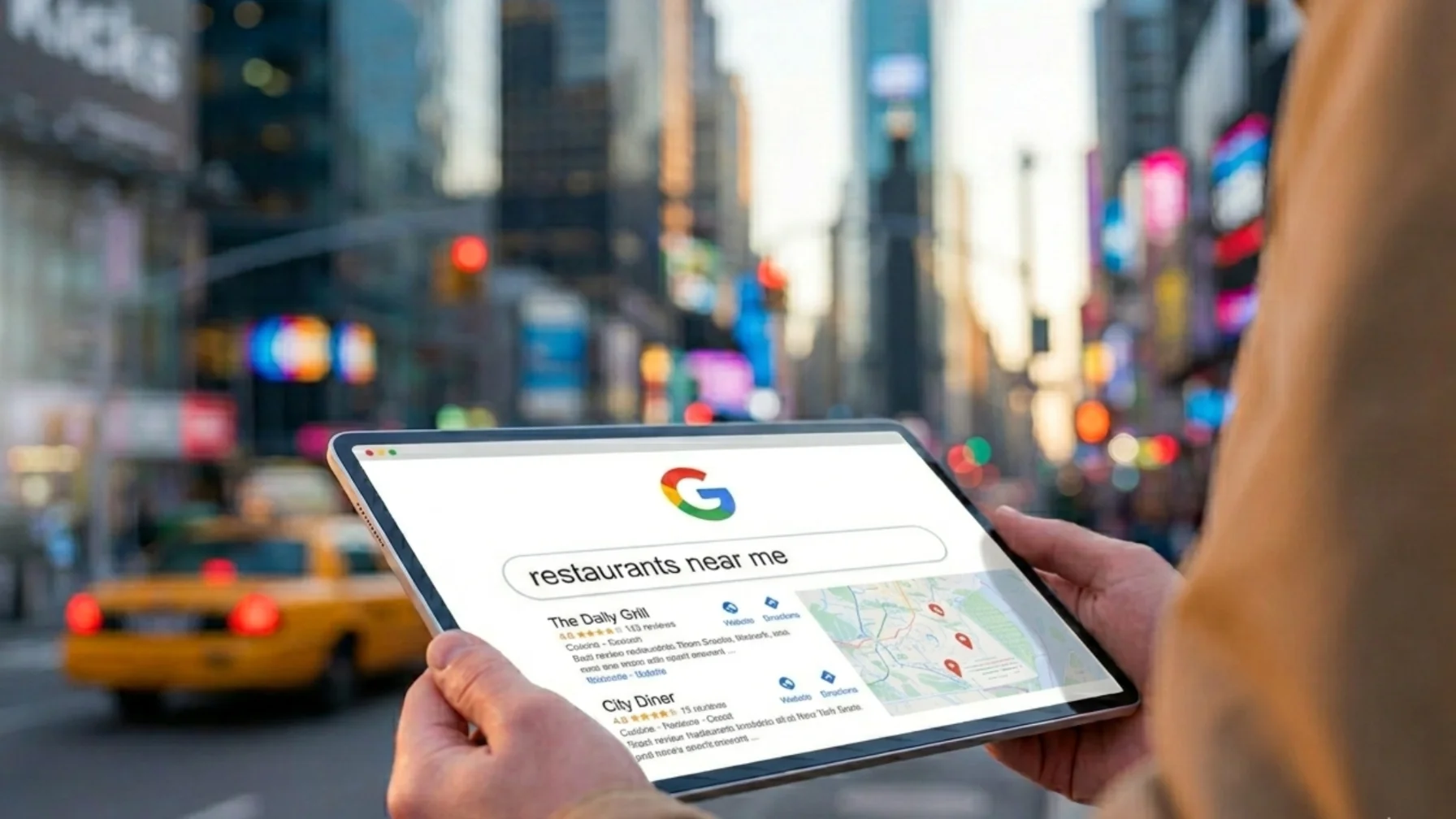
Your customers are searching for restaurants right now. Will they find you?